

How to Use Content to Blow Up Your Business So Fast People Think You’re an Overnight Success
The hidden psychology behind creating content that's impossible to ignore

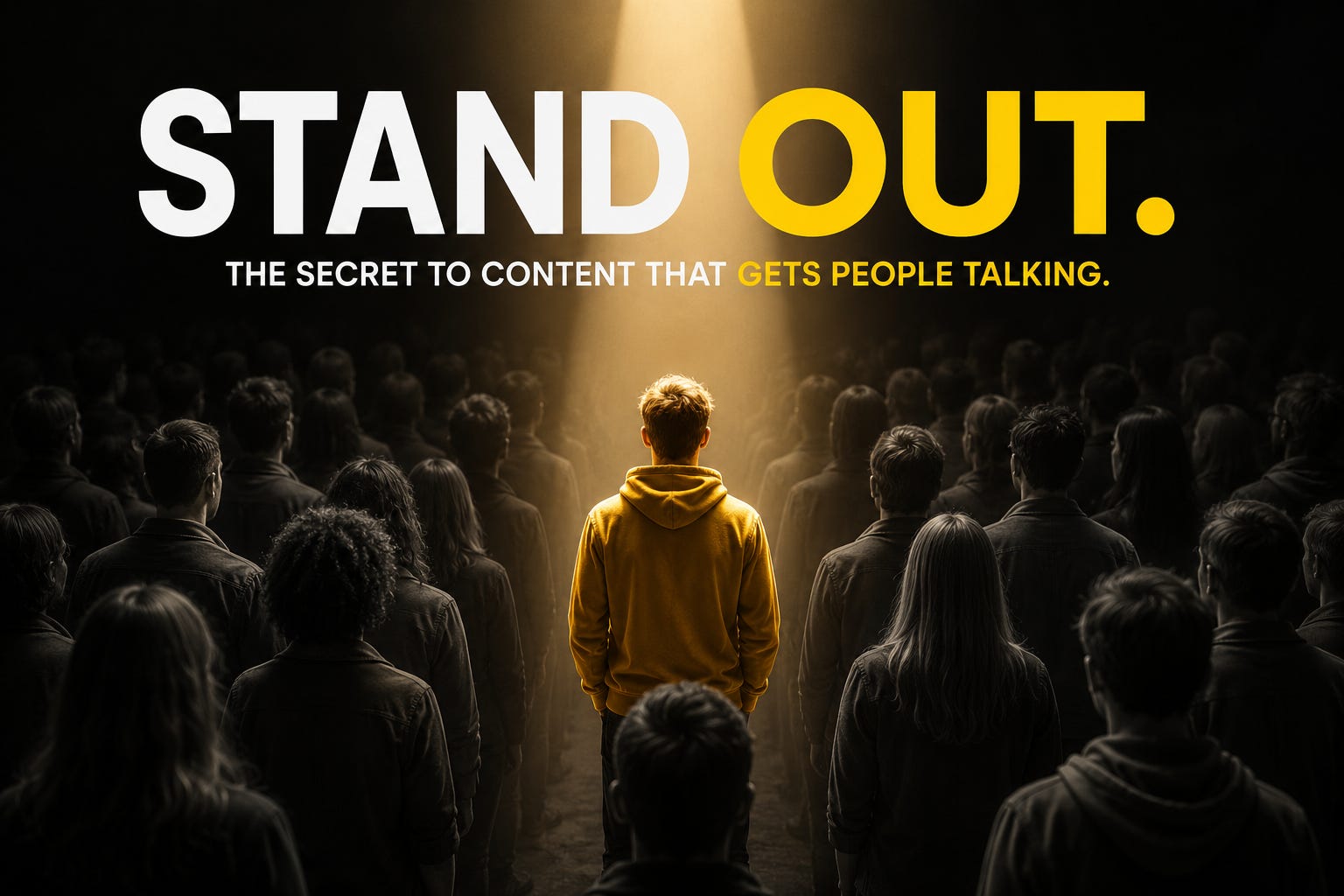
Think of any creator who blew up on social media “out of nowhere.”
A few have become household names, like:
Justin Welsh
Alex Hormozi
Lara Acosta
And the ones who’ve been on the rise lately are:
There’s actually an explainable reason as to how they’ve done it.
All of these people have something in common.
And if you knew what that commonality is, you’d be able to blow up your content just like they did.
So today, I’m going to talk to you about something called “talking points.”
This is the hidden ingredient you need.
What are talking points?
There is no official definition of a “talking point.”
But I’ll define it as follows:
“Something someone does, creates, or possesses that stirs up conversation.”
For example, I was once in a religious cult that gained mass notoriety among the black community in London for its flamboyant approach to “church.”
By no means am I proud, but I once went extremely viral with some ex-friends for a rap song we did at a Christmas party that people on social media thought was a church service when it was uploaded online.
What did I (and another ex-friend) do?
I’ll just show you…
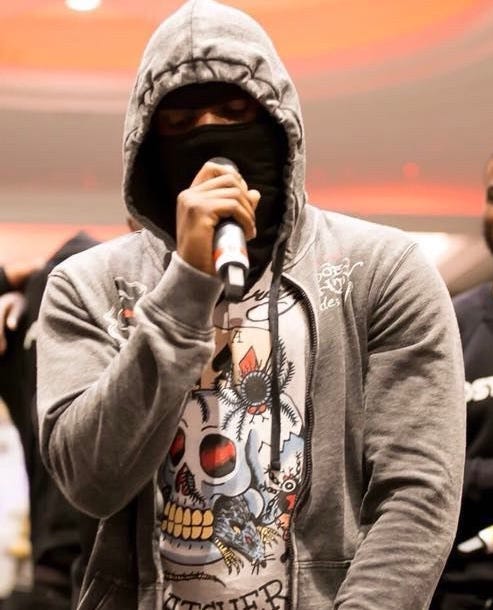
We wore balaclavas.
But that’s not all…
We also:
Wore designer clothes
Used street slang in our lyrics
Rapped on a dark UK drill beat
This came at a time when the Metropolitan Police were handing out Criminal Behavior Orders (CBOs) to prevent certain individuals from making drill music and taking videos off YouTube because they believed it incited violence.
But when we did it, it stirred conversations.
Everyone online was talking about it.
”That’s ungodly!”
“Should Christians be wearing designer?”
”Why are they wearing balaclavas in church?"
”This is actually a smart way to relate to the youth”
We were even given our own music genre by the public: “Gospel Drill.”
The week the video of us went viral, the church attendance went from 500/600 to 2000.
Note that this wasn’t a deliberate act we took to stir up controversy.
All the people in the group and I were avid drill music fans and had grown up in environments where this was the norm.
When we became Christians, we were expected to stop listening to this type of music, but we all felt like this alienated us from where we’d come from.
So rather than stop listening entirely, we decided to flip the negativity typically attached to drill on its head and assign it to what we now believed in… God.
But my ex-friend and I went the extra mile and wore balaclavas because, at the time, we were also trying to get into top-rated universities (LSE for me, UCL for him) and feared that appearing in such videos online would hinder our chances.
All of these things together created talking points.
Why are talking points so powerful?
When you create or possess a talking point, it stirs up conversation because it stands out from the crowd.
And it’s irresistible for humans not to talk about something that stands out.
People want to share the “weird” things they’ve discovered.
This creates the most important thing in the media industry…
Attention!
The more people who are paying attention to you, the more it will drive people to the product you’re promoting out of curiosity.
In our case, the product was the church.
This is how the church grew exponentially, and the senior pastor now had an influx of youth from crime-ridden, difficult backgrounds whom he could push his agenda on.
He used this influence to get us to disregard our finances and hand over everything we could make to him.
Of course, this is a negative scenario because the people who came weren’t gaining anything while the senior pastor was making millions.
But if what you’re offering genuinely makes people better, it’s a win-win.
Long story short, talking points are powerful because they will get you attention.
And attention can make you a LOT of money.
The mindset of the talking point creator
Now, you’re probably wondering how you can introduce talking points into your content.
And I promise, I’m going to get to it…
But I can’t tell you the how without first orienting you in the mindset of someone who creates talking points.
These people have an enhanced perspective.
They don’t look at things and judge…
They look at things and observe.
“Why are they doing this?”
This is very different from the majority.
Most people today are consumers.
They spend most of their time aimlessly scrolling passively so they can subconsciously judge.
Talking point creators are observers.
They’re not quick to come to a conclusion about people.
Long before my ex-friend and I decided to wear balaclavas at the Christmas party (and later at church), we had a ton of conversations about drill artists and their choices.
We would say things like, “This is literally all they know. If they had other things they could talk about, they would.”
Whereas the majority of society had just labeled these people as bad influences.
In other words, we were looking beyond what the majority of drill artists were doing and talking about in their music and simply asked ourselves, “Why?”
We didn’t judge them.
Since we felt like the reason they were constantly talking about drugs and violent crime in their music was that it was all they knew as a result of their environment, it didn’t feel unusual to adopt their aesthetic because we also came from the same environment.
The only thing we changed was the messaging because we believed that was the problem.
Essentially, what I’m saying is this…
To be able to create talking points, you’ve got to stop judging people for what they do on the surface so you can develop an understanding of how the majority function.
When you understand how a group of people functions in a certain environment, you can distinguish yourself from the crowd by switching out the aspects you don’t agree with for the things that align with you.
How to enhance things about yourself to create talking points
To create a brand of talking points, you don’t have to look very far.
