

[SERIES] Personal Branding Blueprint: A Practical Guide to Building a Cult-Like Following of Buyers
The 5-step framework for becoming the obvious choice in your niche

Over the past 6 years, I’ve had the privilege of working with companies like NVIDIA, DataCamp, and Neptune AI (which was later acquired by OpenAI), to name a few.
I’ve also worked closely with founders, consultants, coaches, and creators who use personal branding to grow their businesses.
At first glance, these customers may look completely different.
But as I’ve worked with more and more of them, I’ve noticed they all share one thing in common:
They have an audience that trusts them.
An audience that pays attention when they speak.
An audience that is ready to buy when they launch something new.
In other words, they have a brand.
The kind that makes people choose them over competitors who may be cheaper, bigger, or more established.
And stay loyal.
After studying hundreds of successful creators, founders, and businesses, I started noticing the same patterns appear over and over again.
The strongest personal brands are not built by accident.
They’re built through a series of deliberate decisions.
And I’ve decided to distill those deliberate actions I’ve observed into a practical series.
So whether you’re a freelancer, founder, coach, consultant, or creator…
These are the 5 steps to building a personal brand that attracts attention, earns trust, and creates loyal buyers:
Leverage your unfair advantages
What’s in it for me?
Content pillars and themes
Content calendar buildout
Distribution strategy
Let’s walk through what you’ll learn in each lesson…
Episode 1: Leverage your unfair advantages
There are things you’re uniquely qualified to speak on that I am not.
You may have earned it through years of experience in a specific area of work.
Or you could’ve inherited through circumstance, network, geography, education, or status.
To be honest, it doesn’t matter where this advantage you have came from…
What matters is that you know it exists and you’re using to your benefit.
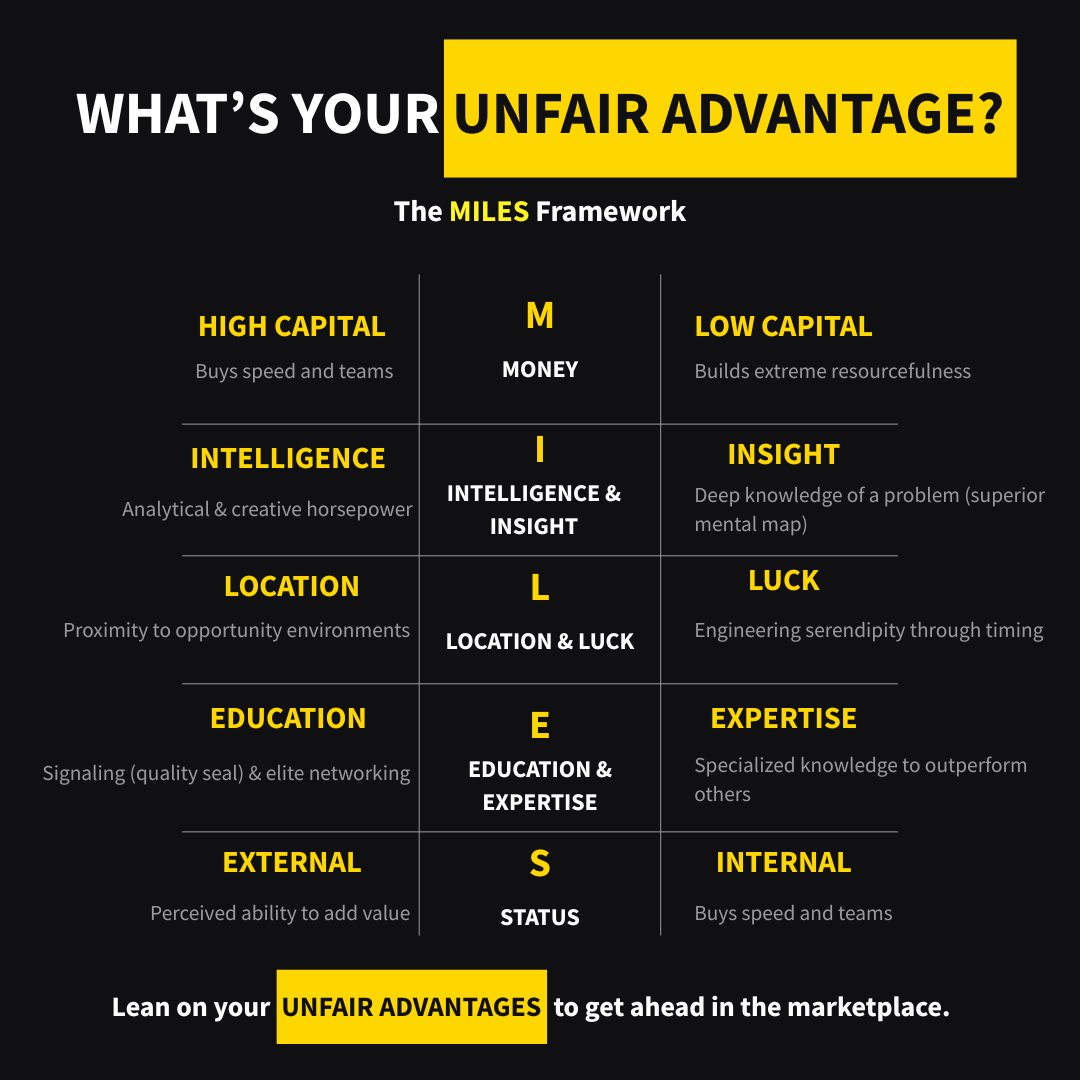
So in this episode, I’ll show you how to identify your unfair advantage using Ash Ali’s MILES Framework.
Then I’ll show you how to use this advantage in your positioning strategy.
Because the easiest way to stand out online is to lean harder into the things that make you difficult to replace.
Episode 2: What’s in it for me?
Your audience scrolls the internet with one question in mind:
“What’s in it for me?”
In other words, people only follow you when they believe you can help them achieve something they want (or if they’re your mom and good friends).
If they can’t gauge that what you’ve created is for them within the first 3 seconds, they’re gone.
And they may never return.
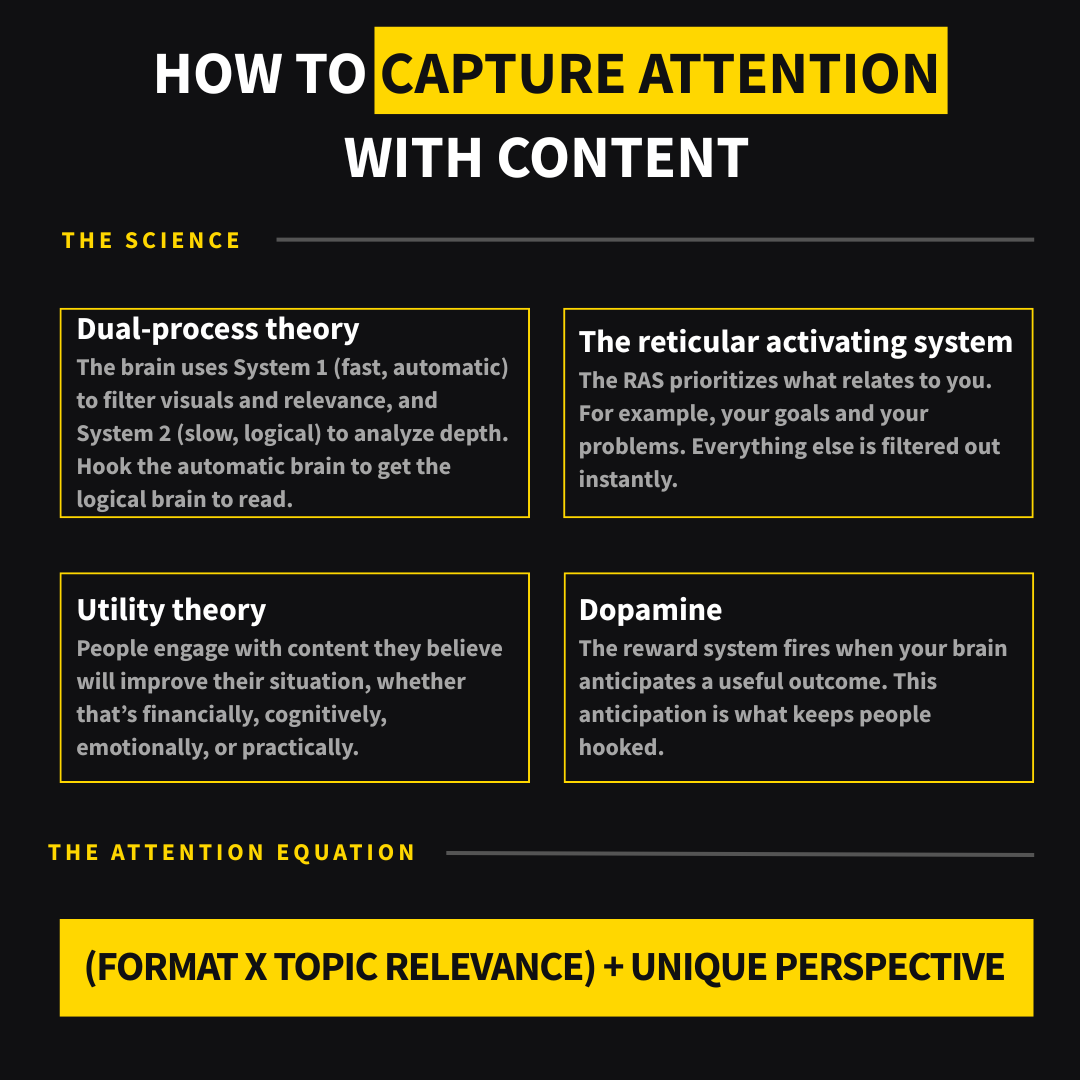
So in this lesson, I’ll show you how to use psychology to capture your audience’s attention fast.
You’ll learn about concepts such as:
How the brain filters information through self-interest
How to beat those brain filters
How to identify your minimum viable audience
Episode 3: Content pillars and themes
If you’re struggling to produce content ideas, it’s likely because you lack structure.
You should never have to wonder, “What should I post today?”
This question is a symptom that you haven’t clearly defined what you want to be known for.
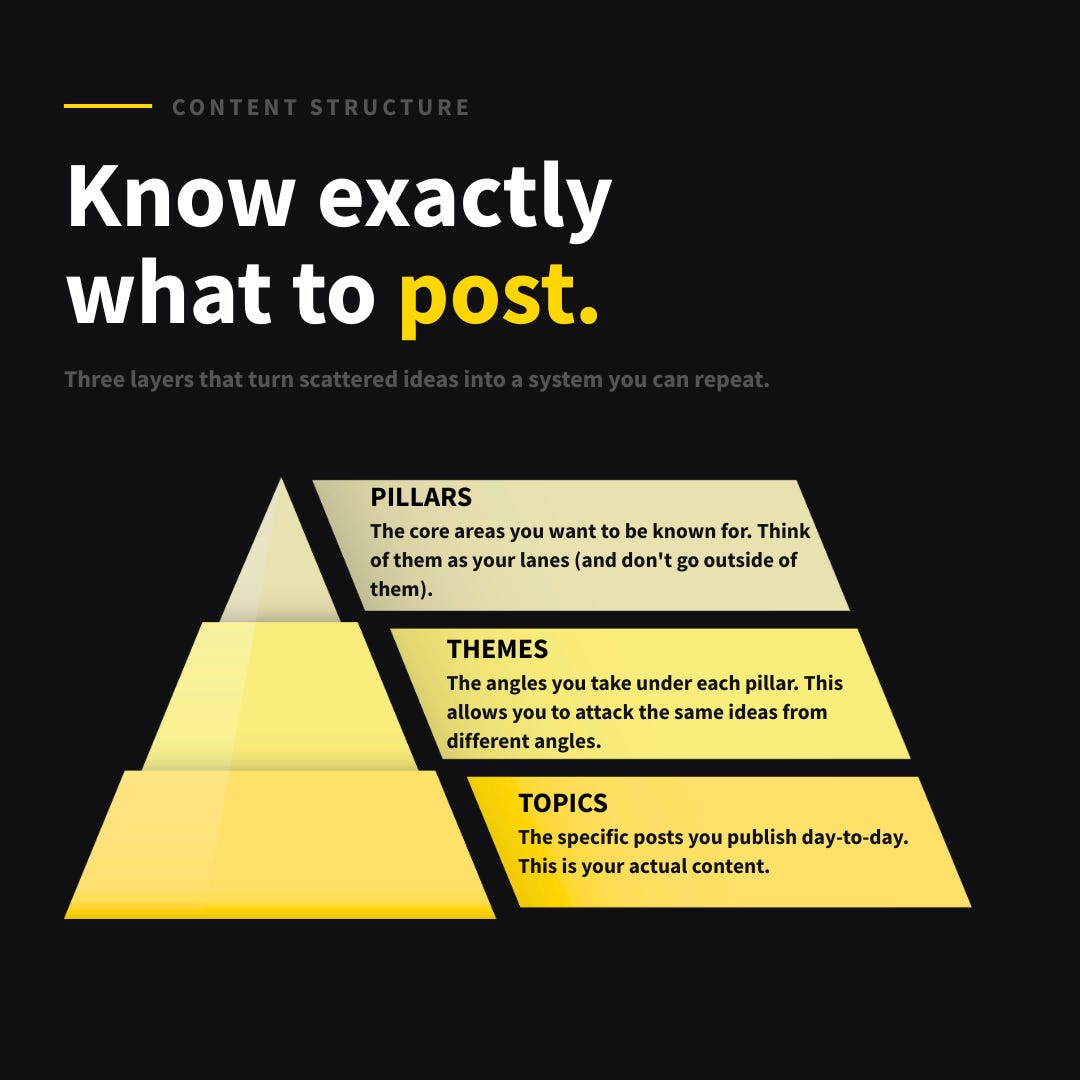
So in this lesson, I’ll show you how to build a content ecosystem using pillars, themes, and topics.
You’ll learn:
The difference between pillars, themes, and topics
How to create constraints that make content creation easier
How to define the areas you want to be known for
How to generate an endless stream of relevant content ideas
Most importantly, you’ll learn how to create coherence across your content.
Which means I’ll show you how to stand for something.
Episode 4: Content calendar buildout
Once you’ve identified your pillars, themes, and topics, the next challenge is turning them into a repeatable publishing system.
Knowing what to post is one thing... posting consistently is another.
You can’t rely on motivation or inspiration to strike, because there’s a good chance it never will.
So in this lesson, I’ll show you how to build a content calendar that removes guesswork from the process.
You’ll learn:
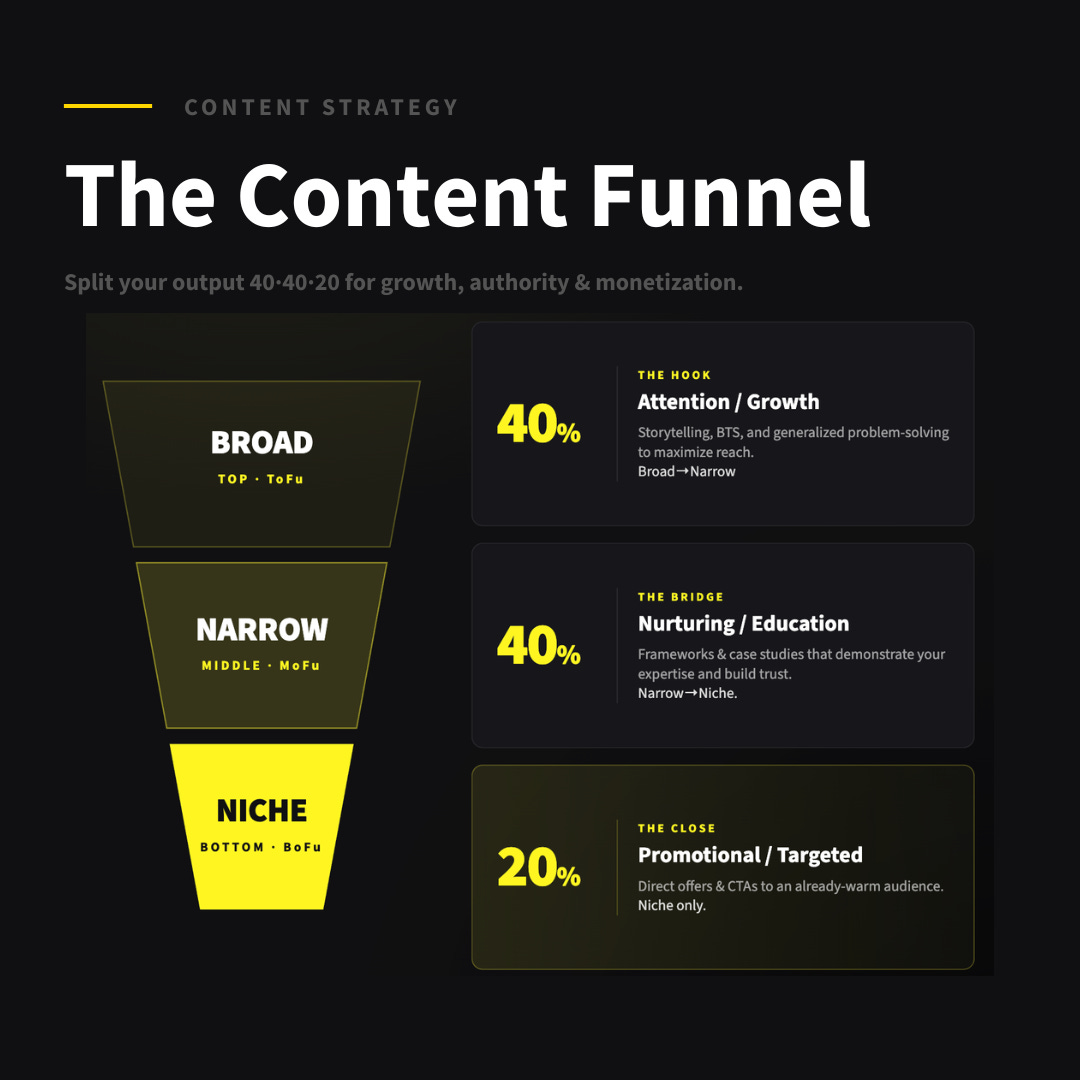
How to organize your content pillars into a publishing schedule
How to balance educational, personal, and evidence-based content
How to batch ideas so you’re never starting from a blank page
How to create a system that works even when you’re busy
Episode 5: Distribution strategy
Creating content is the easy part.
Getting people to see it is where the real challenge begins.
Most people treat content like a one-off event.
They post something.
It underperforms.
Then they move on to the next idea.
But if you want to maximize the return on your effort, you need to think like a distributor.
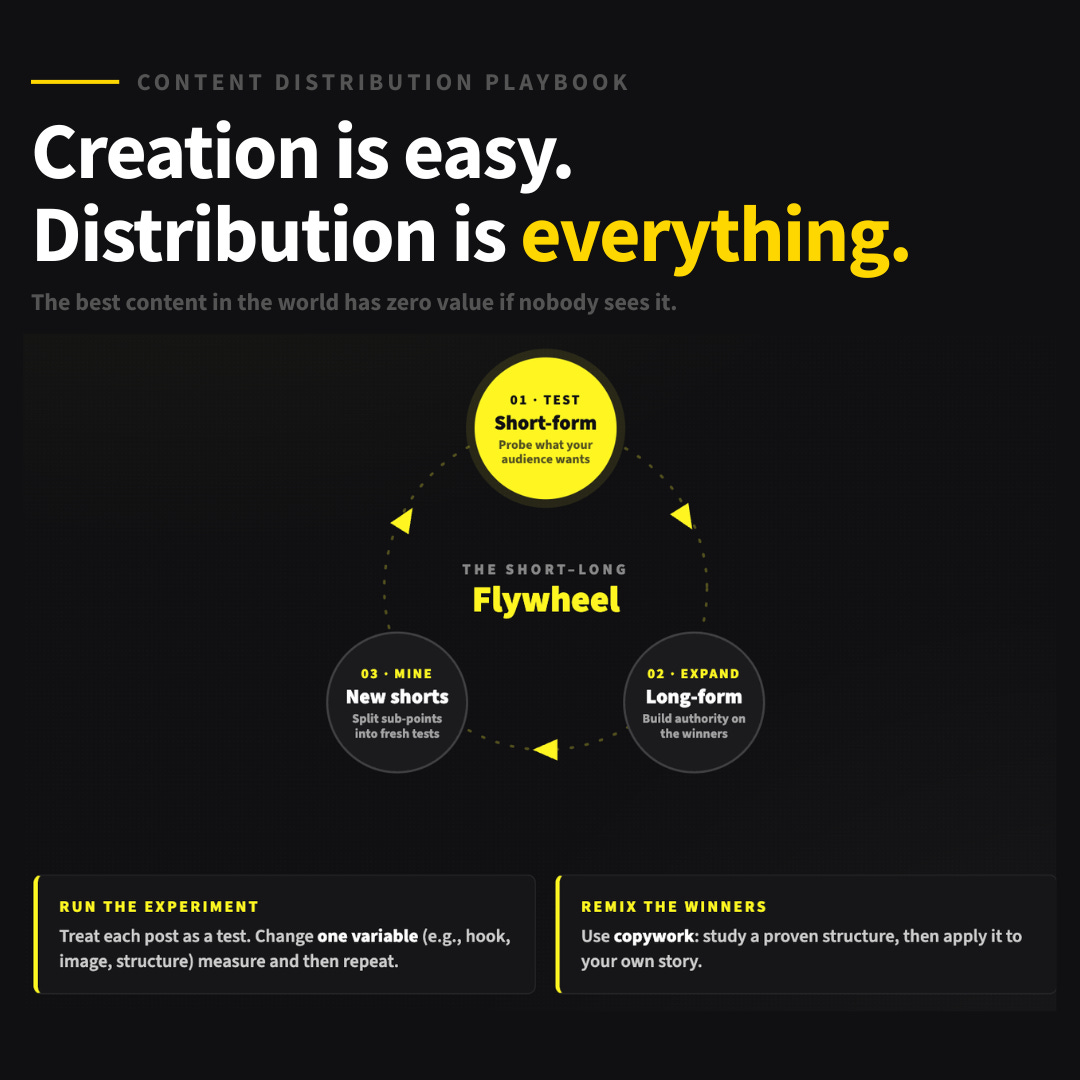
In this lesson, I’ll show you how to extend the lifespan of your best ideas and systematically increase the odds of your content reaching the right people.
You’ll learn:
Why distribution matters more than creation
How to use short-form content to test ideas before investing heavily in them
How to turn successful posts into long-form content and vice versa
How to apply the scientific method to improve your content over time
How to leverage copywork and proven formats to accelerate growth
By the end of this series…
You’ll have far more than a personal brand.
You’ll have a system.
A system for identifying what makes you unique.
A system for attracting the right people.
A system for creating content consistently.
A system for distributing your ideas effectively.
Most importantly, you’ll understand how to build trust at scale.
And become the obvious choice when someone needs the thing you provide.
Whether your goal is to attract clients, sell products, land opportunities, or build an audience around your ideas...
This series will give you the framework to do it deliberately instead of hoping it happens by accident.
Thanks for your support.
P.S. Would love to hear your feedback :).